Cucciddati — Sicilian Christmas Fig Cookies
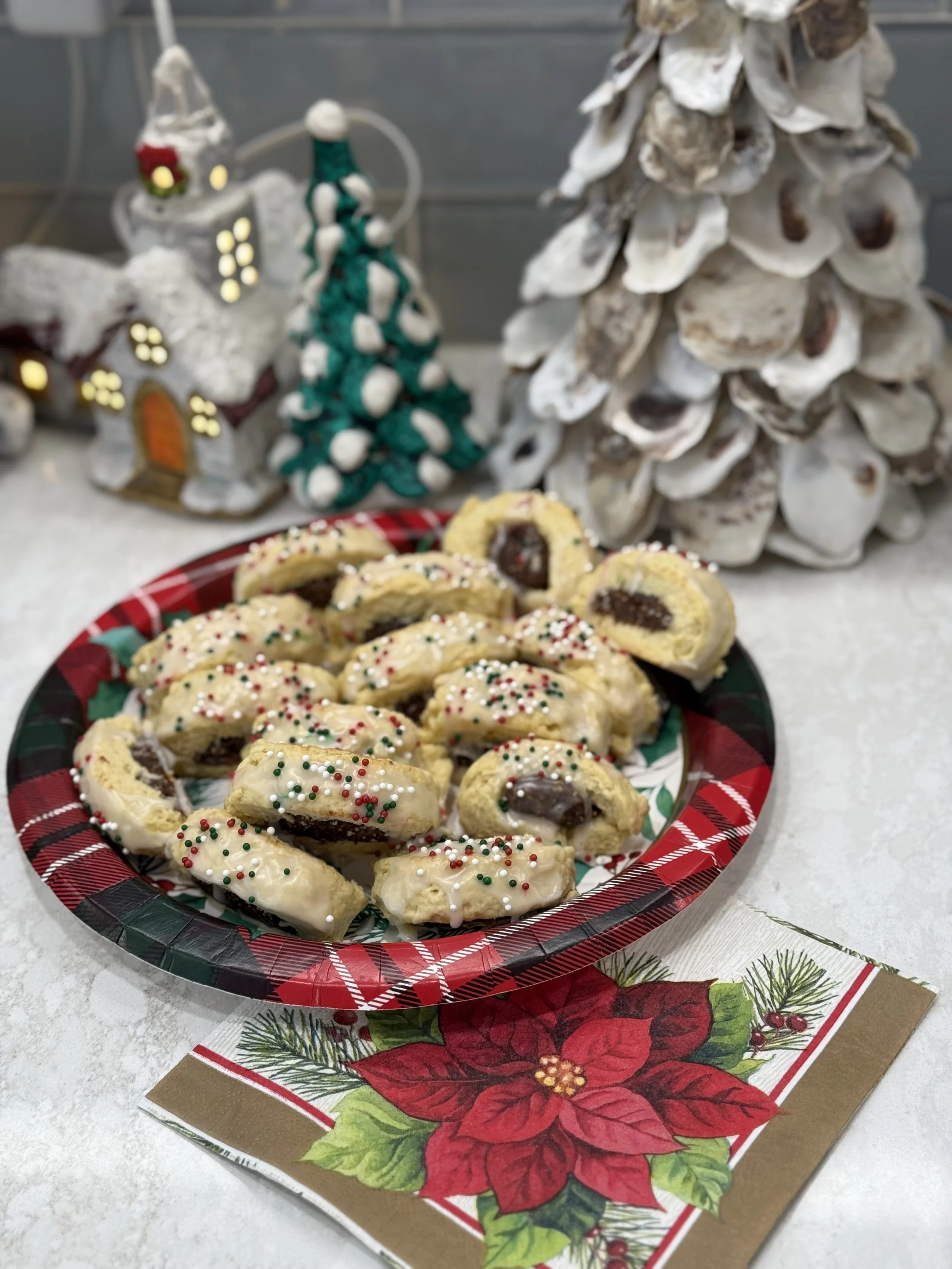
Cuccidati, Sicilian Christmas Fig Cookies
The origins of cucciddati stretch all the way back to Arab Sicily, when dried fruits, nuts, honey, and spices were staples of the island’s cuisine. Over centuries, Catholic tradition folded these flavors into Christmas rituals
The name varies by town:
Cucciddati (Palermo + Western Sicily)
Cucidati (Trapani, Agrigento)
Buccellati (Ragusa + Modica — usually larger, ring-shaped versions)
Cuccidati means a filled or decorated roll and it comes from a similar 2,000 year old ancient Roman treat called Buccellatum. This makes Cuccidati one of the oldest Christmas cookies on earth.
The cookie’s filling is a testament to Sicily’s past.
Figs and honey from the ancient Greeks.
Citrus, Cinnamon, cloves, and spices brought by Arab rule.
Nuts in pastries was preserved by the Byzantines
Lard and butter was introduced by the Normans.
Chocolate and candied fruit was introduced by the Spanish.
Every flavor is a reminder that Sicily has always been a cultural crossroads.
Over time, Sicilians wrapped all of that history into a festive holiday cookie — a symbol of abundance, family, and the blending of traditions.
So when you bite into a cuccidatu, you’re not just tasting a cookie… you’re tasting over two thousand years of Sicilian history, baked into something delicious.
Recipe
Yields 24-30 Cookies
Ingredients
Dough
3 cups (360 g) all-purpose flour
½ cup (100 g) granulated sugar
½ cup (113 g) unsalted butter, softened
½ cup (120 ml) milk
2 eggs
2 tsp baking powder
½ tsp salt
Zest of 1 orange (optional but highly traditional)
Fig Filling
2 cups dried figs, stems removed
½ cup raisins
½ cup walnuts or almonds
¼ cup honey
¼ cup orange marmalade OR 1 grated apple
1–2 Tbsp Marsala wine (optional, or substitute orange juice)
1 tsp cinnamon
¼ tsp cloves
Zest of 1 orange
Pinch of salt
Glaze
1 cup powdered sugar
2–3 Tbsp milk
Splash of vanilla
Instructions
1. Make the Filling
Add figs and raisins to warm water and let soak for 10 minutes.
Add figs, raisins, nuts, honey, marmalade (or apple), Marsala (or orange juice), spices, zest, and salt to a food processor.
Pulse into a thick, sticky paste.
Transfer to a bowl and cover while you prepare the dough.
Refrigerate for at least 30 minutes (or overnight).
Pro tip: If it seems too dry, add a teaspoon of water or juice. If too loose, add a few chopped nuts or more figs.
2. Make the Dough
In a large bowl, whisk together the flour, sugar, baking powder, and salt.
Add softened butter and work it in with your fingers until the mixture resembles coarse crumbs.
Add eggs, milk, and orange zest.
Mix until a soft dough forms — it should feel like cookie dough, not bread dough.
Wrap and chill for 30 minutes (optional but makes rolling easier).
3. Shape the Cuccidati
Cut the dough into workable portions.
Roll each portion into a rectangle, about ⅛–¼ inch thick.
Place a rope of filling down the center.
Fold the dough over the filling like a log and seal the edges.
Cut into small pieces (2–3 inches).
Shape into:
little logs
S-shapes
crescents
wreaths (for “buccellatini” style)
Snip or score the tops with scissors for the traditional decorative look.
4. Bake
Bake at 350°F (175°C) for 15–20 minutes, until lightly golden but not deeply browned.
5. Glaze & Decorate
Mix the powdered sugar, milk and splash of vanilla and stir together until smooth.
Drizzle lightly, then add rainbow sprinkles for the Palermo-style festive look.
Cucciddati are:
even better the next day
perfect for gifting
ideal for feast days in December → Immacolata, Novena, Christmas Eve
Store at room temperature for up to 1 week, or freeze unglazed for 2–3 months.
