Involtini di Melanzane
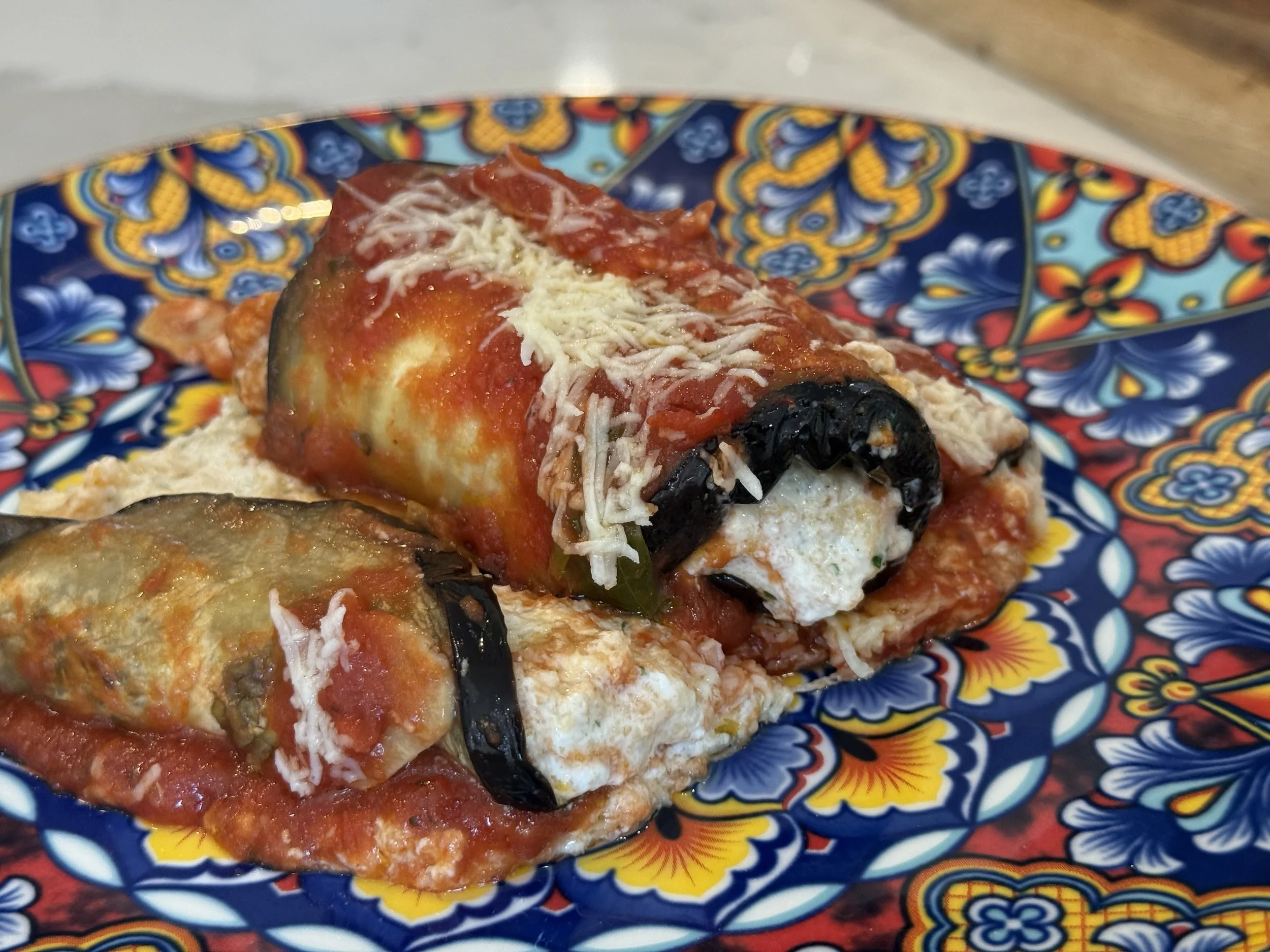
Involtini di Melanzana
There are some dishes that immediately transport you to Sicily with a single bite. Caponata, Pasta alla Norma, and arancini all come to mind. Yet few recipes embody the island’s history and spirit quite like Involtini di Melanzane.
At first glance, it’s a simple dish. Thin slices of eggplant are wrapped around a creamy ricotta filling, nestled into a bright tomato sauce, finished with grated Pecorino, and baked until everything melts together. But like so many Sicilian recipes, its beauty lies in its simplicity.
Eggplant isn’t native to Sicily. It originated thousands of miles away in India before making its way west through Persia. During the Arab rule of Sicily between the 9th and 11th centuries, new crops, irrigation techniques, and culinary traditions transformed the island forever. Along with lemons, sugar cane, pistachios, spinach, and rice, the Arabs introduced the eggplant, a vegetable that would eventually become one of Sicily’s defining ingredients.
The Sicilians embraced it wholeheartedly.
The island’s hot summers, mild winters, and fertile volcanic soils created the perfect environment for eggplants to thrive. Over generations, they became a cornerstone of cucina povera, the resourceful style of cooking that transformed humble ingredients into unforgettable meals.
Eggplant involtini is a perfect example of that philosophy.
Fresh ricotta, fragrant basil, aged Pecorino Romano, homemade tomato sauce, and tender grilled eggplant come together to create something far greater than the sum of their parts. It’s elegant enough for a Sunday family gathering, yet simple enough to make with ingredients that many Sicilian families once grew or produced themselves.
One of my favorite details about this dish is that every bite tells the story of Sicily itself. Greek traditions of cheesemaking, Arab agriculture, Spanish tomatoes from the New World, and generations of Sicilian home cooks all come together on a single plate.
Sometimes the greatest recipes aren’t the most complicated. They’re the ones that have quietly endured for centuries.
This may honestly be one of the best things I’ve ever cooked, and after one bite, I completely understood why this dish has remained a Sicilian classic for generations.
Recipe
Serves 6:
Ingredients
For the Eggplant:
2 large Italian eggplants
Extra virgin olive oil
Kosher salt
For the Filling
15 ounces whole milk ricotta, drained overnight
1 cup grated caciocavallo cheese
¼ cup grated Pecorino Romano
¼ cup fine Italian breadcrumbs
2 tablespoons chopped fresh parsley
8 to 10 basil leaves, finely chopped
1 garlic clove, grated
Zest of ½ lemon
Salt and freshly ground black pepper
For the Sauce
2 tablespoons extra virgin olive oil
3 garlic cloves, smashed
1 (28 ounce) can San Marzano crushed tomatoes
10 fresh basil leaves
Salt and pepper to taste
For finishing:
• Additional grated Pecorino Romano
• Additional grated caciocavallo
• Fresh basil
• Olive oil
Instructions
Slice the eggplants lengthwise into ¼-inch slices. Salt both sides and let them rest for 30 to 45 minutes. Rinse and pat completely dry.
Brush the slices lightly with olive oil and grill or roast until tender but still sturdy enough to roll. Allow them to cool.
Heat the olive oil in a saucepan over medium heat. Add the garlic and cook until fragrant. Stir in the tomatoes, season with salt and pepper, and simmer for about 30 minutes. Add the basil during the final few minutes of cooking.
In a bowl, combine the ricotta, caciocavallo, Pecorino Romano, breadcrumbs, parsley, basil, garlic, lemon zest, salt, pepper, and nutmeg. Mix until smooth and well combined.
Spread a generous spoonful of filling onto each eggplant slice and roll tightly.
Spoon a thin layer of tomato sauce into the bottom of a baking dish. Arrange the involtini seam-side down.
Spoon the remaining sauce over the top and sprinkle with the additional cheeses. Finish with a light drizzle of olive oil.
Bake at 375°F for 25 to 30 minutes, then broil for 2 to 3 minutes until lightly browned.
Let the involtini rest for 10 minutes before serving. Finish with freshly torn basil and another light grating of Pecorino Romano.
