Pasta con le Sarde
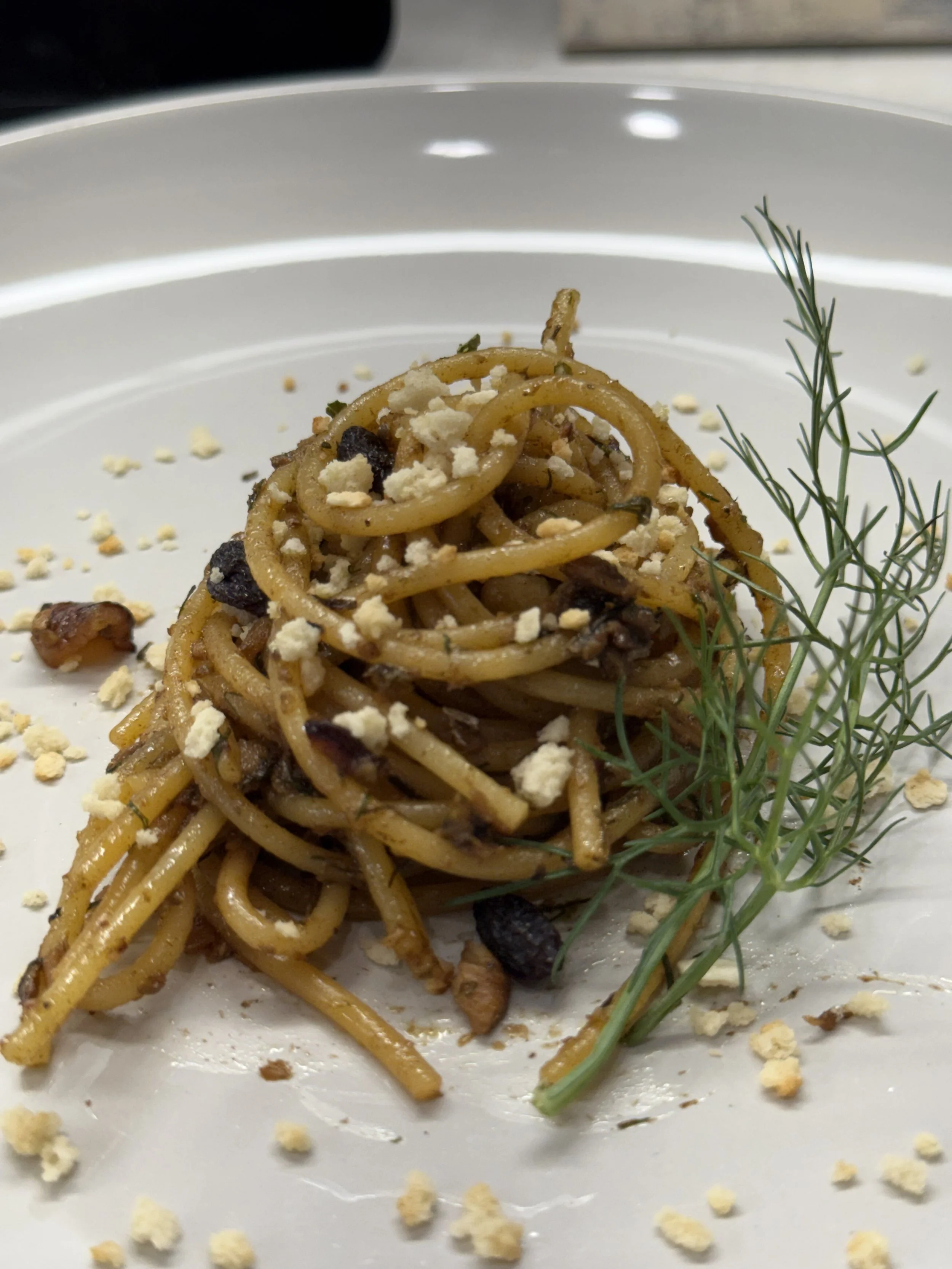
Pasta con le Sarde
Few dishes capture the history of Sicily as vividly as pasta con le sarde. At first glance it may seem like a simple pasta with fish, but the ingredients reveal centuries of culture layered into a single dish. Sardines from the Mediterranean, wild fennel growing on the hillsides, and the unmistakable sweet-savory combination of raisins, pine nuts, and saffron tell the story of Sicily’s landscape and the many civilizations that shaped its cuisine.
The origins of the dish are often traced to Palermo during the Arab period in Sicily, between the 9th and 11th centuries. According to culinary legend, a cook preparing food for an army found himself with limited provisions. Looking around the countryside, he gathered what was available: wild fennel growing along the hills, sardines from the nearby sea, and pantry ingredients common in Arab cooking such as raisins, pine nuts, and saffron. Combined with pasta, the result was a dish that balanced herbal, briny, sweet, and savory flavors in a way that was completely new.
That balance of flavors is one of the clearest fingerprints of Arab influence on Sicilian cuisine. Sweet ingredients paired with savory ones appear throughout the island’s food traditions, from caponata to couscous dishes in western Sicily. Pasta con le sarde is perhaps the most famous example.
Over time the dish became closely associated with the feast of St. Joseph, celebrated on March 19. In Sicily the day holds special importance because of a long-standing tradition tied to a medieval drought. According to legend, the people prayed to St. Joseph for rain and relief from famine. When rain finally came, families promised to prepare large tables of food to feed the poor in gratitude. These became the famous St. Joseph’s tables, filled with breads, vegetables, and meatless dishes that honored both the saint and the spirit of charity.
Because the feast occurs during Lent, many of the foods prepared for the day avoid meat. Pasta con le sarde fits perfectly into this tradition. The dish uses fish instead of meat and is finished with toasted breadcrumbs rather than cheese. In Sicily these breadcrumbs are called muddica atturrata, meaning toasted crumbs, and they are often referred to as “poor man’s cheese.” Some even say the crumbs symbolize the sawdust from the workshop of St. Joseph the carpenter.
The season also plays a role in the dish’s connection to the feast. Wild fennel grows abundantly across Sicily in late winter and early spring, just as the feast of St. Joseph approaches. Sardines are also plentiful in coastal waters during this time. What began as a practical meal made with local, seasonal ingredients eventually became a culinary emblem of Palermo.
Today pasta con le sarde remains one of the most iconic dishes of Sicilian cuisine. It reflects the island’s geography, its agricultural rhythms, its Arab heritage, and its Catholic traditions. Sea and mountains, sweetness and salt, poverty and celebration all come together in a single plate of pasta.
Recipe
Serves 4
Ingredients
200 g bucatini or spaghetti
8–10 fresh sardines, cleaned and filleted
1 small bunch wild fennel fronds (or fennel tops if wild fennel is unavailable)
3 tablespoons olive oil
½ small onion, finely diced
2 anchovy fillets
2 tablespoons pine nuts
2 tablespoons raisins
1 pinch saffron
4 tablespoons toasted breadcrumbs
Salt and black pepper to taste
Instructions
Bring a large pot of salted water to a boil. Add the wild fennel fronds and boil them for about 3 to 5 minutes until tender and fragrant. Remove the fennel with tongs, finely chop it, and reserve it. Do not discard the water.
Cook the pasta in the same fennel-scented water until al dente. Reserve about one cup of the pasta cooking water before draining.
In a wide pan, heat the olive oil over medium heat. Add the diced onion and cook until soft and translucent. Stir in the anchovy fillets and allow them to dissolve into the oil.
Add the pine nuts and drained raisins and cook for about one minute until fragrant.
Add the sardine fillets and cook gently for about two minutes, breaking them slightly as they cook. Stir in the chopped fennel and the saffron dissolved in a small amount of warm water.
Add a splash of the reserved pasta cooking water and let the sauce simmer for a few minutes to combine the flavors.
Add the drained pasta to the pan and toss until the pasta is coated with the sauce. Adjust seasoning with salt and black pepper.
Plate the pasta and finish with a generous sprinkle of toasted breadcrumbs, the traditional Sicilian substitute for grated cheese.
Serve immediately.
