Ragù
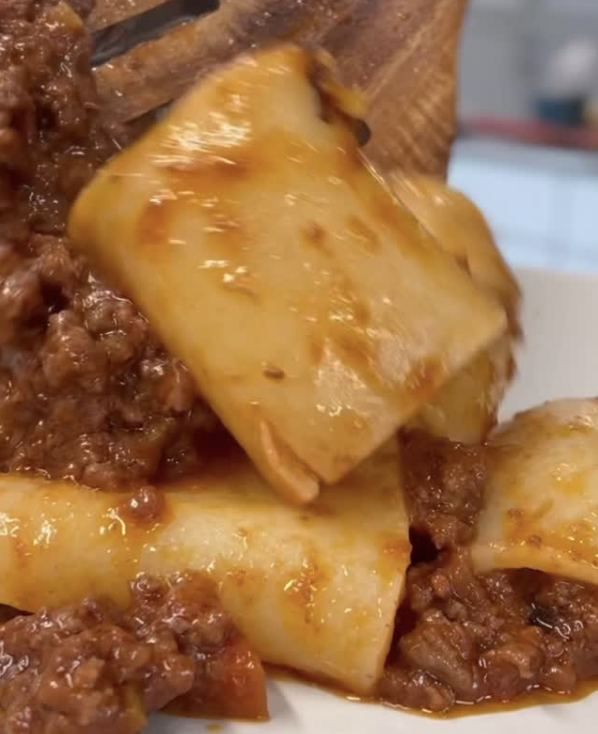
Ragù
Few sauces are as deeply tied to Italian cooking as ragù. Rich, slow-simmered, and built on simple ingredients, ragù represents the philosophy that defines much of Italian cuisine: patience, balance, and respect for ingredients.
Many people outside of Italy think ragù simply means “meat sauce,” but the story is far more interesting. The word ragù actually comes from the French word ragoût, which referred to a slow-cooked meat stew meant to stimulate the appetite. During the 17th and 18th centuries, French culinary culture held enormous prestige throughout Europe, and Italian aristocratic kitchens often employed French-trained chefs. Through these cultural exchanges, the technique and name made their way into Italy.
Italian cooks quickly adapted the idea. Instead of serving the dish as a stew, they transformed it into a condiment for pasta. Over time the sauce became thicker, the meat was chopped or ground more finely, and the cooking time stretched longer to develop deeper flavor.
Tomatoes were not part of the earliest ragù. When tomatoes began appearing in Italian cooking in the late 18th and early 19th centuries, they were used sparingly, mostly to add balance and color rather than dominate the sauce. The result was something new: a meat-based pasta sauce that was slow-cooked, deeply savory, and perfectly suited to coat noodles.
Today ragù exists in countless regional variations across Italy. Some are made with beef, others with pork, lamb, or wild game. Some contain tomatoes while others remain completely white. One of the most famous versions is ragù alla bolognese from Bologna, but every region and family has its own approach.
Despite the variations, the essence of ragù remains the same everywhere in Italy: a slow-cooked sauce where meat is the star, vegetables build the foundation, and time does the real work.
This version reflects a widely recognizable Italian approach and pairs beautifully with egg pasta like tagliatelle or pappardelle.
Recipe
Serves 4 - 6
Ingredients
2 tablespoons olive oil (or olive oil and a small knob of butter)
1 small onion, finely chopped
1 carrot, finely chopped
1 celery stalk, finely chopped
400 g (14 oz) ground beef, or a mix of beef and pork
1/2 cup dry wine (red or white both work)
2 tablespoons tomato paste
1 cup passata or crushed tomatoes
Salt to taste
Black pepper to taste
Tagliatelle or Pappardelle
Instructions
1. Build the Base
Heat the olive oil in a heavy pot or Dutch oven over medium-low heat.
Add the onion, carrot, and celery and cook slowly until the vegetables are soft and fragrant. This soffritto should cook gently for about 8 to 10 minutes without browning.
2. Brown the Meat
Add the ground meat and increase the heat slightly. Break it up with a spoon and cook until the meat is fully browned and begins to develop deeper color.
3. Add Wine
Pour in the wine and let it simmer until the alcohol has evaporated and the liquid has mostly reduced.
4. Add Tomato
Stir in the tomato paste and cook it into the meat for a minute or two to deepen the flavor.
Add the passata or crushed tomatoes and season lightly with salt and pepper.
5. Simmer Slowly
Lower the heat and allow the sauce to simmer very gently, partially uncovered, for at least 1 1/2 hours. Two to three hours is even better. Stir occasionally and add a splash of water or broth if the sauce becomes too thick.
6. Add Pasta
Cook your pasta in well-salted water until al dente. Reserve a little pasta water before draining.
Add the cooked pasta directly to the pot with the ragù and toss gently so the sauce coats every strand. If needed, add a small splash of pasta water to loosen the sauce.
7. Finish and Serve
Serve immediately with freshly grated Parmigiano Reggiano.
