Chiacciere
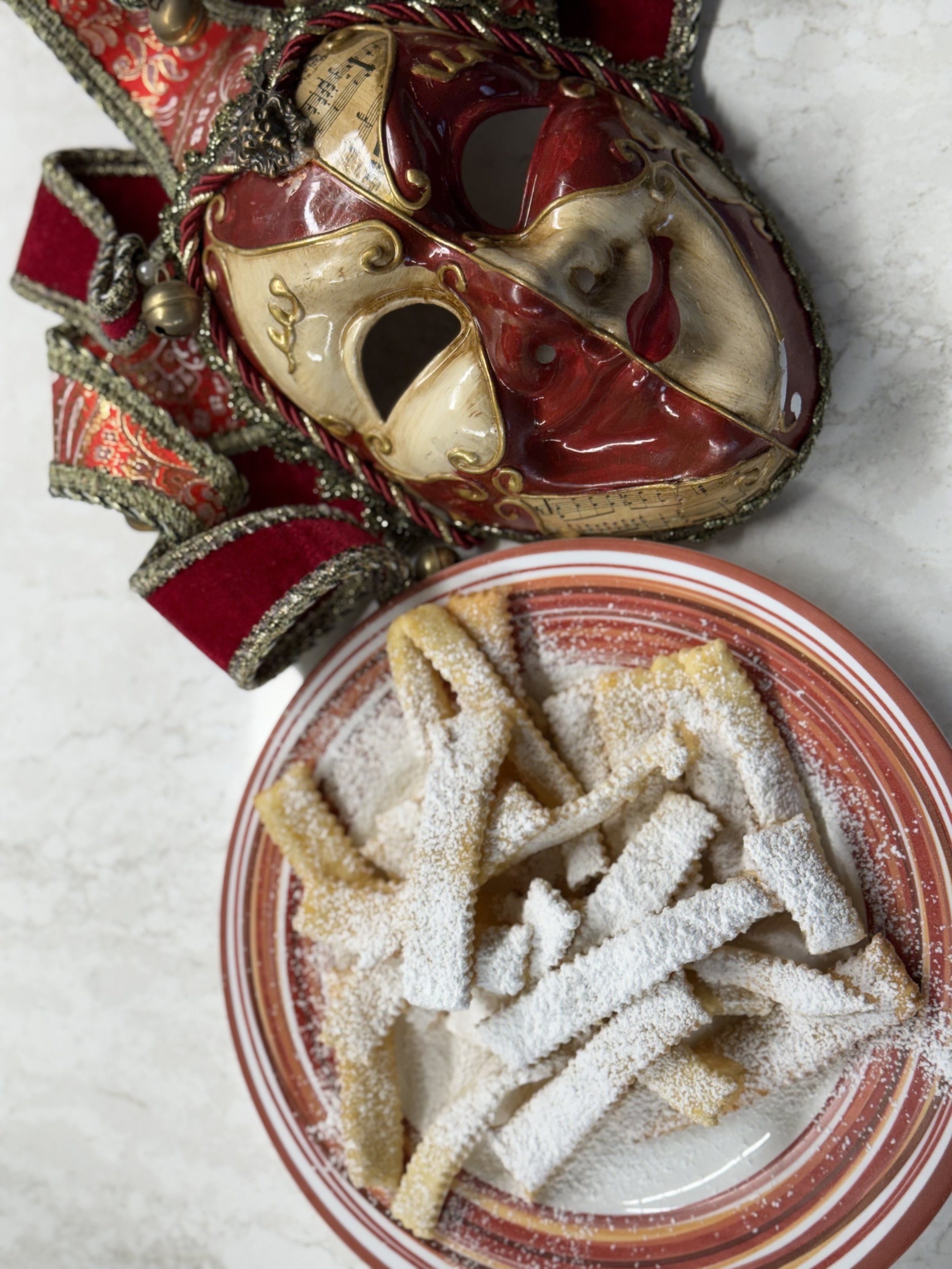
Chiacchiere
The sound of Carnevale in Italy is not just music and laughter. It is the crisp crackle of fried dough dusted with powdered sugar. Chiacchiere are one of the most beloved sweets of the Carnival season, appearing in bakeries and kitchens across the country in the weeks leading up to Lent.
The word chiacchiere literally means “chatter” or “gossip.” Many Italians say the name comes from the light, crispy sound the pastry makes when you bite into it. Others connect it to the lively conversations and celebrations that define Carnevale. Either way, the name captures the spirit of the holiday perfectly: joyful, noisy, and indulgent.
These pastries have roots that stretch much further back than modern Italy. In Ancient Rome, during the winter festival of Saturnalia, people prepared fried sweets called frictilia. These simple pieces of dough were fried in fat and handed out to celebrate a period of excess and merriment before returning to normal life. Over time, as Christian traditions shaped the calendar, Carnevale became the last moment of indulgence before the fasting and restraint of Lent. Frying sweets like chiacchiere fit perfectly into that tradition.
Today every region of Italy has its own name for the same idea. In Tuscany they are called cenci. In Rome they are frappe. In Piedmont they are bugie. In Veneto they are crostoli. Despite the different names, the pastry is essentially the same everywhere: a very thin sheet of dough cut into ribbons and fried until blistered and crisp.
The key to great chiacchiere is rolling the dough extremely thin. When fried quickly in hot oil, the thin sheets puff slightly and develop delicate bubbles that give them their signature texture. Once dusted with powdered sugar, they become impossibly light, fragile, and addictive.
Chiacchiere are meant to be shared. They appear at family gatherings, school parties, neighborhood bakeries, and Carnevale celebrations across Italy. A platter of them on the table means winter is ending, celebration is underway, and spring is on the horizon.
Recipe
Yields 15-20 chiacchiere
Ingredients
250 g 00 flour (about 2 cups)
30 g granulated sugar (about 2½ tablespoons)
1 large egg
25 g unsalted butter, melted and cooled (about 2 tablespoons)
30–40 ml dry white wine, grappa, or vodka (about 2–3 tablespoons)
Zest of half a lemon or orange
Pinch of salt
Neutral oil for frying (peanut or sunflower oil works well)
Powdered sugar for dusting
Instructions
1. Combine Dry Ingredients
In a bowl or on a work surface, combine the flour, sugar, salt, and citrus zest.
2. Add Wet Ingredients
Add the egg, melted butter, and wine (or vodka). Mix until a rough dough forms.
3. Knead the Dough
Knead the dough until smooth and firm, about 8 to 10 minutes by hand, or about 2 to 3 minutes using a mixer with the dough hook.
4. Let Dough Rest
Wrap the dough tightly and let it rest at room temperature for 30 to 60 minutes. This relaxes the gluten and makes rolling easier.
5. Roll the Dough
Divide the dough into two or three portions.
Roll each piece very thin, ideally using a pasta machine.
Roll down to about setting 6 or 7 so the dough is nearly translucent.
6. Cut the Dough
Using a fluted pastry wheel or knife, cut the dough into rectangles or ribbons about 1 by 3 inches. You can cut a small slit in the center of each piece if you like.
7. Fry the Dough
Heat frying oil to about 170–175°C (340–350°F).
Fry a few pieces at a time for about 20–40 seconds per side until lightly golden and blistered. They should stay pale and crisp rather than dark brown.
Transfer to paper towels to drain.
6. Finish and Serve
Once cooled slightly, dust generously with powdered sugar and serve.
