Minestrone - THE Italian Soup
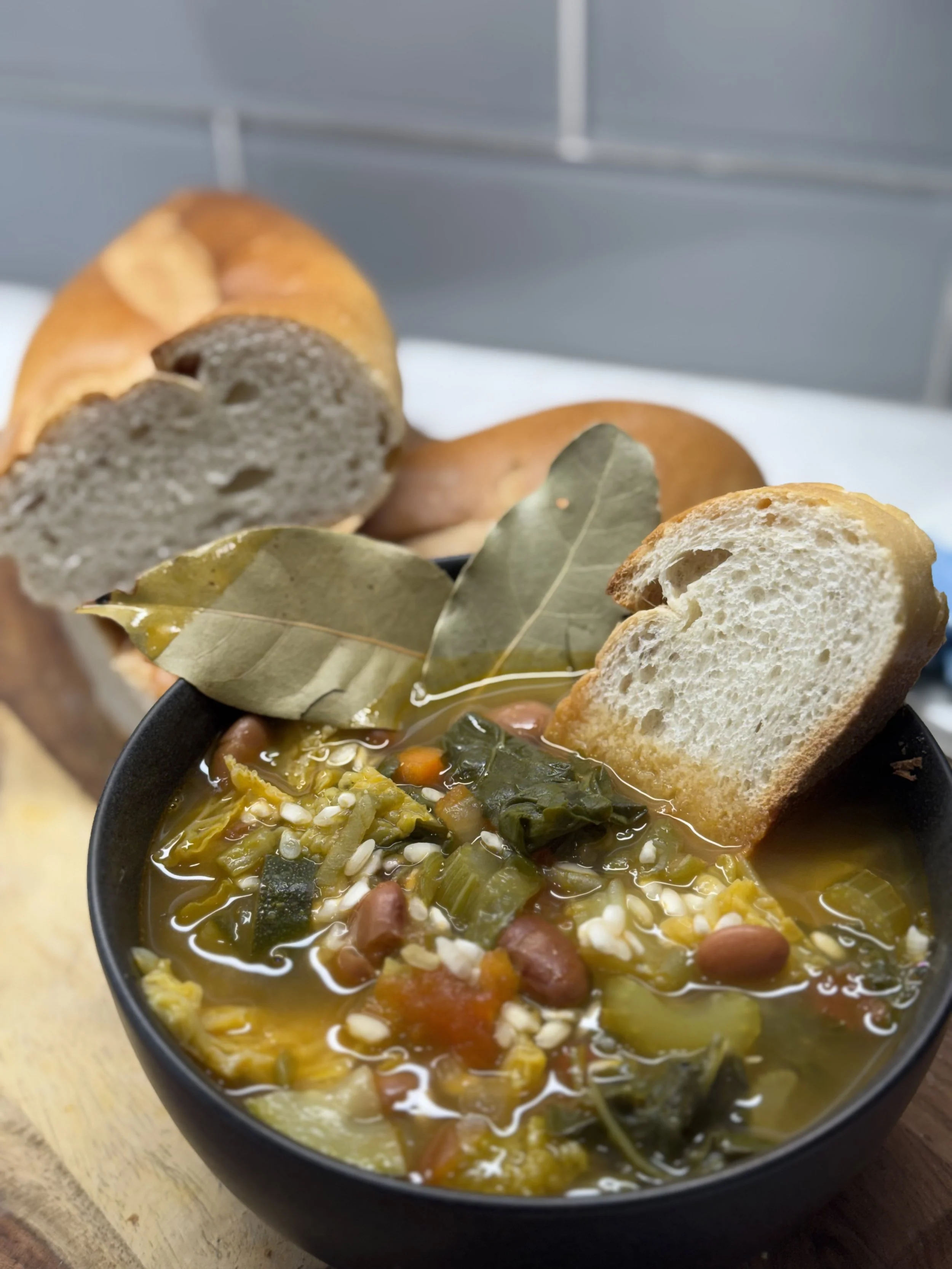
Minestrone
Minestrone isn’t a recipe…it’s a method, a philosophy, and a quiet lesson in how Italians have cooked for centuries.
The word minestrone comes from minestra—“that which is served.” What’s served depends entirely on what you have. And that’s the point.
Its roots stretch back to ancient Roman times, when meals were built around grains, legumes, and vegetables rather than meat. Over the centuries, minestrone became the ultimate expression of cucina povera: cooking born of necessity, frugality, and respect for ingredients. Nothing wasted. Nothing ornamental. Everything intentional.
There was never one correct version. In the north, minestrone might be pale and bean-heavy, finished with rice or farro. In the south, tomatoes eventually found their way into the pot. In summer, it stayed light. In winter, it thickened into something closer to a stew.
What mattered wasn’t precision—it was seasonality.
That’s why every Italian family claims their minestrone is the real one. And they’re all right.
Minestrone survives because it feeds people properly. It’s slow food without being precious. Nourishing without showing off. A pot that simmers while life happens around it.
This recipe is not prescriptive. It’s a starting point—the way minestrone has always been.
Recipe
Serves 12
Ingredients
Olive oil
2 onions, finely chopped
4 carrots, diced
4 celery stalks, diced
6 cloves garlic, lightly crushed
2 zucchini, diced (skin on)
2 potatoes, diced
1 small head of Swiss chard, stems removed and leaves chopped
1/2 small head of Savoy Cabbage
3 cans (16 oz each) cannellini or borlotti beans, rinsed
1 can (28 oz) crushed tomatoes
2 rinds Parmigiano Reggiano (optional but traditional)
About 10 cups water and/or light vegetable broth
1½ cups arborio rice
Salt, to taste
Freshly ground black pepper
Extra-virgin olive oil, for finishing
Optional finish: grated Parmigiano Reggiano
Instructions
1. Build the Base
Heat olive oil in a large pot over medium heat.
Add onion, carrot, and celery. Sauté 5–7 minutes until soft and fragrant.
Add garlic and cook 30 seconds.
2. Add the Veggies
Stir in zucchini and potatoes. Let them absorb the oil and aromatics for 3–4 minutes.
3. Add Tomatoes and Broth
Add crushed tomatoes and the Parmigiano rinds. Stir well.
Add 9 cups of water and 3 cups vegetable broth
Bring to a gentle simmer—not a boil. Cover partially and cook for 30–40 minutes, until vegetables are tender and the broth tastes rounded.
4. Add the Beans and Grains
Add rinsed beans and arborio rice (or pasta). Simmer another 10–12 minutes, stirring occasionally.
5. Add the Greens
Stir in Swiss chard and Cabbage. Cook just until wilted and tender, about 5 minutes.
Turn off heat and let the soup rest for 10 minutes. Remove Parmigiano rinds.
Taste and adjust salt. Add black pepper and a generous drizzle of good olive oil.
